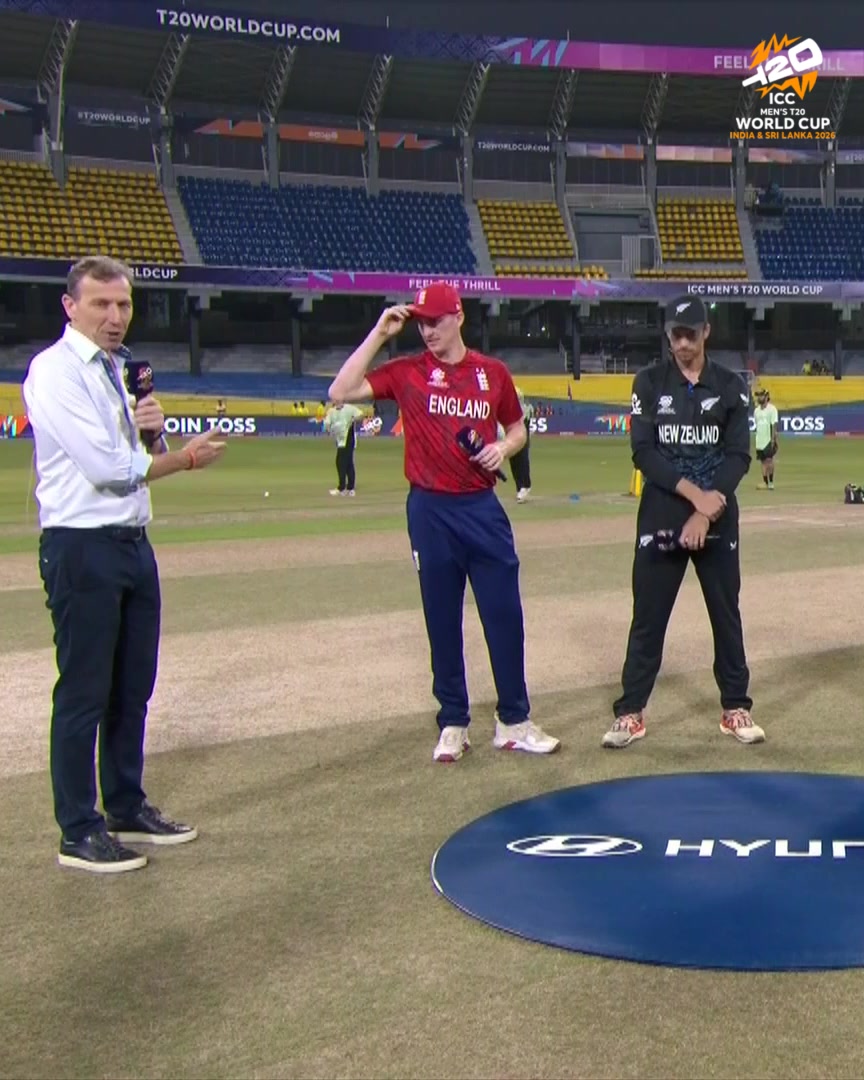
NZ Bats First Against England: Super Eights Clash Decides T20 World Cup Semifinal Fate
The ICC T20 World Cup 2026 Super Eights stage has reached its crescendo, with every match now carrying immense weight in the pursuit of semifinal berths. In a highly anticipated Group 2 clash at the R Premadasa Stadium in Colombo on Friday (February 27), the spotlight fell firmly on the coin flip. It was New Zealand captain Mitchell Santner who called correctly, leading to a crucial New Zealand T20 toss decision: the Blackcaps elected to bat first against England. This choice, made under immense pressure, sets the stage for a dramatic encounter that will directly determine the fate of not just New Zealand, but also keep Pakistan's flickering hopes alive.
As the tournament progresses, the margin for error shrinks to zero. While England, under Harry Brook's captaincy, has already secured their place in the last-four stage with impressive back-to-back victories, the battle for the second spot from Group 2 is fiercely contested. New Zealand, with 3 points from their previous matches, knew a win against England was paramount to join them in the semifinals. The strategic choice at the toss was the first significant move in what promises to be a captivating battle of wits and skill.
The Crucial Toss: Why New Zealand Chose to Bat First
Winning the toss in a high-stakes T20 encounter is often considered half the battle, and Mitchell Santner's decision to bat first was a clear statement of intent. The R Premadasa Stadium in Colombo is known for pitches that tend to slow down as the game progresses, offering increasing assistance to spinners, particularly in the second innings. This makes setting a formidable total a highly attractive proposition, allowing the bowling unit to defend a score with the added advantage of a deteriorating pitch.
By opting to bat first, New Zealand aimed to:
- Apply Scoreboard Pressure: A good total on the board in a knockout-style game can significantly pressure the chasing side, forcing them to take risks.
- Exploit Pitch Conditions: Batting first allows them to make the most of the initial freshness of the wicket, hoping to post a strong total before the pitch becomes trickier for stroke-making. The slowing nature of Colombo wickets often means that chasing becomes harder, even with a strong batting line-up.
- Counter England's Chasing Prowess: England are renowned for their aggressive chasing capabilities, with deep batting resources. By batting first, New Zealand attempts to nullify this strength by forcing England to chase a specific target rather than dictating the pace.
The Santner's Toss Decision: New Zealand Bats First in Crucial T20 World Cup Clash highlights the strategic depth often required in these pressure cooker situations. While modern T20 cricket often leans towards chasing, especially in night games where dew might be a factor, the specific conditions and the immense stakes associated with this Super Eights fixture likely influenced Santner's calculated gamble. The success of this decision hinges entirely on New Zealand's batting unit delivering a total that is both competitive and challenging to defend against an in-form English side.
Semifinal Dreams on the Line: Group 2 Permutations
The implications of this New Zealand vs. England clash extend far beyond the two teams on the field. The match is a definitive decider for the second semifinal spot from Group 2, creating a thrilling three-way race scenario:
- England (Qualified): With two wins under their belt, England has already punched their ticket to the semifinals, showcasing dominant performances against Sri Lanka and Pakistan. For them, this match is about maintaining momentum and fine-tuning strategies for the knockout stages.
- New Zealand (3 points): For the Blackcaps, the equation is straightforward – win, and they qualify. A victory tonight would take them to 5 points, comfortably securing the second spot. Anything less than a win would mean their T20 World Cup journey likely comes to an end, as it would open the door for Pakistan.
- Pakistan (1 point): The Men In Green, having suffered a defeat and a wash-out earlier, are in a precarious position. Their semifinal hopes are clinging on by a thread and are entirely dependent on England defeating New Zealand. Not only do they need an England win, but ideally, they would want it to be by a significant margin. This is because if England wins, Pakistan would then need to beat Sri Lanka in their final Super Eights match on Saturday, and crucially, achieve a superior Net Run Rate (NRR) than New Zealand to progress. An England loss, however, would immediately knock Pakistan out of the tournament.
Net Run Rate (NRR) often becomes the silent killer in multi-team tournaments. It's calculated by taking the average runs per over scored by a team and subtracting the average runs per over conceded by that team. A higher NRR is better. Therefore, should New Zealand lose, Pakistan's mission would not just be to win against Sri Lanka, but to do so decisively to boost their NRR past New Zealand's, adding another layer of complexity to this riveting semifinal race.
Team Lineups and Tactical Shifts
The team selections provided further insight into the tactical approaches of both sides for this crucial encounter. Captains Mitchell Santner and Harry Brook had distinct strategies, reflecting their team's current form and the pitch conditions.
New Zealand's Unchanged XI: A Nod to Consistency
New Zealand opted for consistency, fielding the exact same side that comprehensively defeated Sri Lanka just two days prior. This decision speaks volumes about the team management's confidence in their playing XI and the momentum they gained from their previous victory. The unchanged lineup features:
- Mitchell Santner (captain): The all-rounder's leadership and left-arm spin will be crucial.
- Tim Seifert (wicketkeeper) & Finn Allen: Providing explosive starts at the top.
- Rachin Ravindra, Glenn Phillips, Daryl Mitchell, Mark Chapman: A strong middle-order known for both power-hitting and stability.
- Cole McConchie: An additional all-round option.
- Matt Henry, Ish Sodhi, Lockie Ferguson: A potent bowling attack combining pace, swing, and spin.
This stability allows players to settle into their roles and execute plans with familiarity, a vital factor when facing a formidable opponent like England.
England Bolsters Spin: A Strategic Move
England, already qualified, used this match to experiment slightly and, more significantly, to adapt to the anticipated pitch conditions. They made one notable change, recalling leg-spinner Rehan Ahmed in place of fast bowler Jamie Overton. This tactical shift clearly indicates England's expectation of the R Premadasa track offering more turn and grip as the match progresses.
- Harry Brook (captain): Leading a settled yet adaptable side.
- Phil Salt, Jos Buttler (wicketkeeper), Jacob Bethell, Tom Banton: An incredibly aggressive and deep batting lineup.
- Sam Curran, Will Jacks: All-rounders adding versatility.
- Rehan Ahmed, Liam Dawson, Adil Rashid: A formidable spin trio, perfectly suited for slowing pitches.
- Jofra Archer: Spearheading the pace attack, capable of delivering crucial breakthroughs.
The inclusion of Rehan Ahmed alongside seasoned spinners Liam Dawson and Adil Rashid means England now boasts a three-pronged spin attack. This move is a strategic counter to New Zealand's aggressive batters and acknowledges the historical tendency of Colombo pitches to favor spin, especially in the second innings when the chasing team is under pressure.
The Head-to-Head Factor and Tournament Dynamics
While current form and pitch conditions dictate much of the strategy, historical records often play a subtle psychological role. In T20 Internationals, England holds a dominant head-to-head record against New Zealand, having emerged victorious in 16 of their previous encounters. This psychological edge, though not a guarantee of success, can sometimes influence the mindset of players, adding another layer of intrigue to the contest. New Zealand will be eager to not only secure their semifinal spot but also to reverse this historical trend.
Beyond Group 2, the T20 World Cup Super Eights also saw intense competition in Group 1. South Africa had already cemented their place in the semifinals, leaving India and the West Indies to battle it out for the second available spot from that group. These parallel narratives underscore the competitive nature of the Super Eights, where every run, every wicket, and every new zealand t20 toss decision carries monumental significance.
The tournament has been a masterclass in adaptability, with teams having to adjust quickly to varying conditions across different venues. The strategic choices made by captains at the toss, such as Santner's decision to bat first, are prime examples of this crucial adaptability. The ability to read the pitch, understand the opposition's strengths, and make brave calls under pressure is what ultimately separates the contenders from the champions in a tournament of this magnitude.
Conclusion
The T20 World Cup Super Eights clash between New Zealand and England is more than just another fixture; it's a high-stakes encounter packed with strategic intrigue and immense ramifications for the semifinal lineup. Mitchell Santner's decision following the new zealand t20 toss to bat first has set a clear tactical direction, aiming to exploit the Colombo pitch conditions and put England under scoreboard pressure. With England already through, the Blackcaps are fighting for their tournament life, while Pakistan watches on, hoping for an English victory to keep their own dwindling hopes alive via net run rate.
The contrasting team selections – New Zealand's consistency versus England's spin-heavy adaptation – add further layers to what promises to be a gripping contest. As the action unfolds at the R Premadasa Stadium, fans can expect a thrilling display of T20 cricket, where every ball, every boundary, and every wicket will contribute to shaping the final four of the ICC T20 World Cup 2026.